
C# Interview Prep: Beyond the Basics for Senior Roles
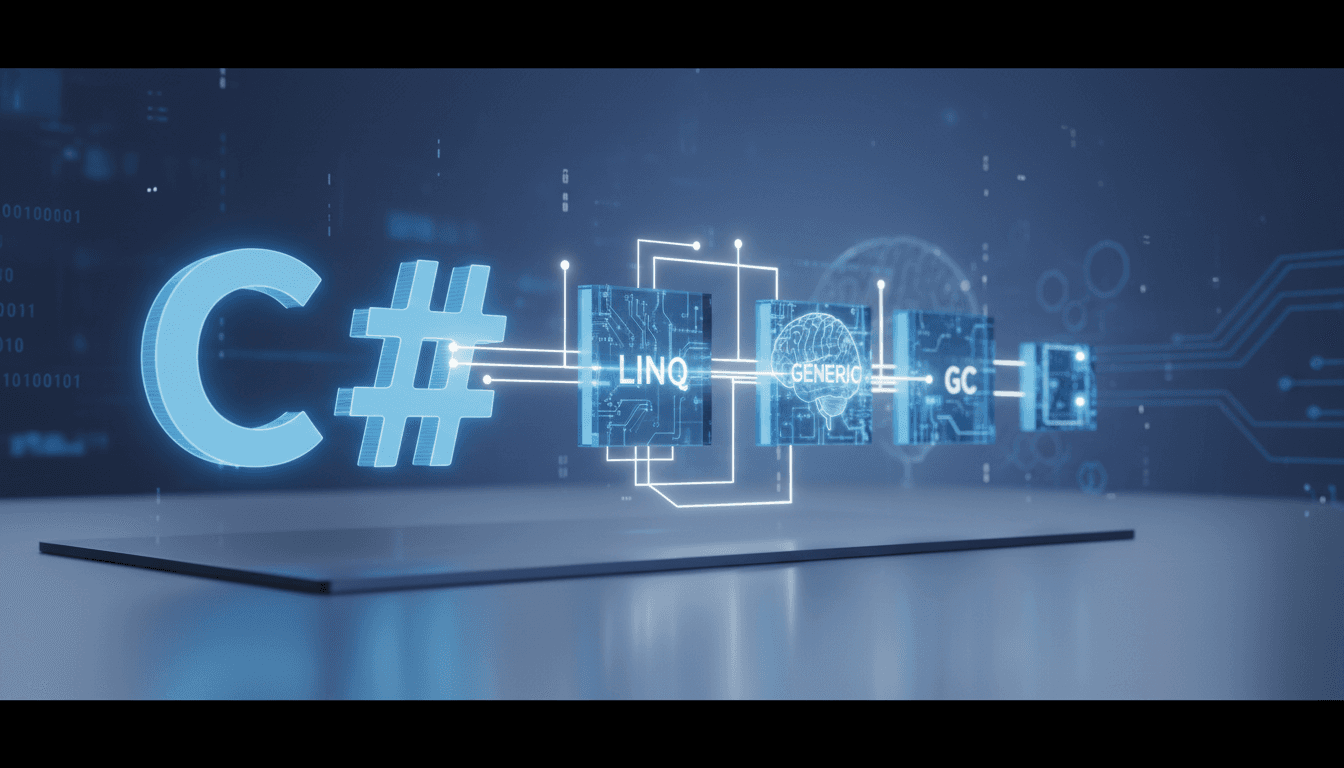
You've built systems that actually ship, you've seen production outages, and you've probably fixed more broken builds than you care to admit. But when it comes to C# interview prep, especially for senior roles, you can't just rely on "knowing" C#. They're not testing your ability to write a for loop. They're probing your understanding of the runtime, your architectural choices, and how you think about performance. We're talking LINQ’s internals, the nuances of generics, and how the GC actually impacts your application.
LINQ: More Than Just Syntactic Sugar
Everyone uses LINQ. You probably write Where().Select() in your sleep. But can you explain how it works? What’s the difference between IEnumerable<T> and IQueryable<T>? This isn't theoretical; it's fundamental to understanding performance. IQueryable translates your C# expression trees into SQL or another query language, pushing the filtering and projection to the data source. IEnumerable pulls everything into memory first, then processes it. That's a huge difference for a large dataset, and if you're building data-heavy applications, you’ll need to make this distinction clear. I've seen candidates stumble hard here, defaulting to "it's just about deferred execution," which is only half the story. Explain yield return in the context of custom LINQ operators. Talk about how LINQ providers work. Show them you understand the mechanism, not just the API.
Consider a scenario where you're asked to optimize a data access layer. Your first thought might be indexing, which is valid, but if you're pulling a million rows just to filter down to ten in memory, you've got a LINQ problem. I'd expect a senior engineer to immediately flag that ToList() or ToArray() call that's happening too early. Discuss how you'd profile a LINQ query – perhaps using a tool like MiniProfiler or even just understanding the SQL generated by an ORM. Don't just say LINQ is "powerful"; explain why and when it's powerful, and also when it becomes a performance bottleneck.
Generics: Beyond List<T>
Generics save us from type-unsafe code and annoying casting, sure. But the interviewers want to know if you understand type constraints, covariance, and contravariance. Can you explain why List<string> isn't assignable to List<object>? Or why IEnumerable<string> is assignable to IEnumerable<object>? This is where out and in keywords come into play, and it’s a concept that trips up many experienced developers. You might not write code using out and in every day, but understanding them shows a deep grasp of type systems and object-oriented principles.
Think about designing a flexible component, like a custom logger or an event bus. You might use generics to make it type-safe for different message types. How would you restrict the types that can be logged? What if you wanted to process different event types that all derive from a common base? This is where generic constraints (where T : class, where T : new(), where T : ISomeInterface) become crucial. Show them you think about design patterns enabled by generics, not just their basic usage. Explain type erasure and reification, especially if you have Java experience, to show a broader understanding of how different runtimes handle generics. This isn't just about syntax; it's about building highly reusable, type-safe, and performant code.
The Garbage Collector: Not a Black Box
The .NET Garbage Collector (GC) is a marvel, but it's not magic. And it's definitely not something you can ignore at a senior level. Interviewers will want to know about generations (Gen 0, 1, 2, and the Large Object Heap), how objects move between them, and the impact of allocations on GC pressure. Explain the difference between workstation and server GC. When would you choose one over the other? How does IDisposable fit into this, and what's the purpose of Dispose() versus finalizers? This is where you talk about deterministic vs. non-deterministic finalization. Knowing about the using statement and its translation into try...finally is entry-level; understanding why you need IDisposable for unmanaged resources, and the pitfalls of relying solely on the GC, is senior-level.
Consider a memory leak scenario. How do you diagnose it? What tools would you use (PerfView, dotMemory, Visual Studio’s diagnostic tools)? What are common patterns that lead to memory leaks in .NET (event subscriptions not unsubscribed, static collections holding references)? A good answer here demonstrates not just theoretical knowledge but practical debugging skills. Don't just list the generations; explain why they exist – to optimize for short-lived objects and reduce collection pauses. This shows an understanding of the underlying engineering trade-offs.
Asynchrony and Concurrency: Beyond async/await
async/await is ubiquitous. You use it for I/O-bound operations constantly. But what's really happening under the hood? Explain the state machine, the TaskScheduler, and how continuations work. What's ConfigureAwait(false) for, and why is it important in library code? This is a common trap. If you just say "it prevents deadlocks," you're missing the point. It's about avoiding context capturing, which can improve performance and prevent deadlocks in specific UI/ASP.NET contexts, but its primary role is ensuring your library code doesn't force a return to the original synchronization context.
Talk about race conditions, deadlocks, and livelocks. How do you prevent them? Discuss lock, SemaphoreSlim, Monitor, and ReaderWriterLockSlim. When would you choose one over the other? For instance, SemaphoreSlim is excellent for limiting concurrent access to a resource, whereas lock is for mutual exclusion. Explain the difference between Parallel.For and Task.Run. One is for CPU-bound parallelism, the other for offloading work to a thread pool. A truly senior candidate understands the difference between concurrency (multiple tasks making progress) and parallelism (multiple tasks executing simultaneously). This isn't just about writing async methods; it's about designing concurrent systems that are performant and correct.
Ready to Ace Your Next Interview?
Practice with AI-powered mock interviews tailored to your target role and company. Start Practicing for Free | Explore Interview Prep