
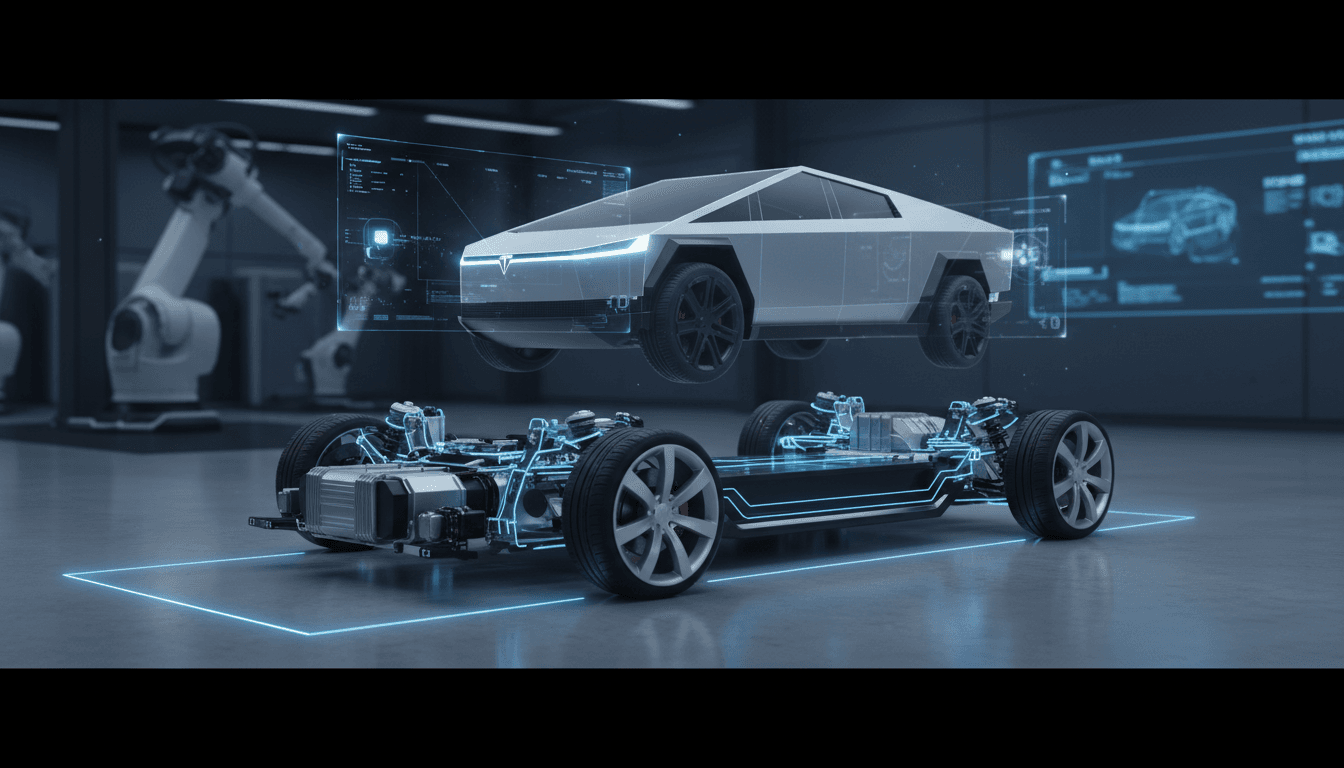
Tesla: Engineering Reality Behind the Hypercar Hype
You asked about Tesla, and let’s be honest, everyone has an opinion. From the outside, it looks like a rocket ship fueled by memes and Elon. From the inside, or at least from what I've seen and heard from friends who’ve done stints there, it’s a high-octane engineering grind with some fascinating problems and some truly wild culture. Forget the glossy press releases; we're talking about what it’s actually like to build software at Tesla, a company that moves at that pace.
The Good, The Bad, and The Ludicrous Mode
First off, Tesla isn’t just a car company. They build batteries, solar, charging infrastructure, AI for self-driving, robotics (Optimus is a thing, remember?), and even their own silicon. This means if you go there, you’re not just writing another CRUD app. You could be working on embedded systems for a Model Y, optimizing the power grid for a Megapack, or fine-tuning vision models for FSD. That breadth is a huge draw for engineers who get bored easily. They're pushing boundaries in tangible, physical products, which frankly, is a refreshing change if you've spent years in pure SaaS. You get to see your code literally drive something, or power something, or make something robotic twitch.
Now, the flip side. That pace? It's brutal. Expect long hours, often undefined scope, and a constant pressure to deliver yesterday. My buddy, an ex-staff engineer who jumped ship after two years, said he learned more in those 24 months than in his previous five years combined, but also aged five years. It's not for everyone. If you thrive in a highly structured, calm environment with clear-cut sprint cycles and predictable deadlines, you’ll probably burn out. Tesla operates on "Elon time," which means timelines are ambitious to the point of being unrealistic, and priorities can pivot on a dime based on the latest tweet or internal directive. This means you need to be incredibly adaptable, comfortable with ambiguity, and possess a thick skin.
Navigating Tesla's Engineering Culture
Working at Tesla means signing up for a specific kind of engineering culture. It’s highly directive, from the top down. Expect direct feedback, sometimes unfiltered, and a constant push for efficiency and speed. This isn't a place for consensus-driven decision-making in the traditional sense. You're expected to be a first-principles thinker, to challenge assumptions, and to propose solutions, not just execute tasks. For some, this autonomy within a demanding framework is exhilarating. You can often cut through bureaucracy that would paralyze larger, more established companies.
On the other hand, the infamous "Elon time" isn't just about deadlines; it's about a mindset. Features get deprioritized, re-prioritized, or entirely scrapped with little notice. A project you've poured months into might suddenly become irrelevant due to a strategic pivot. This requires a certain detachment from your work, an ability to let go and re-focus quickly without getting bogged down by past efforts. It’s a culture that rewards speed of iteration over perfection in the initial go. They’d rather ship a minimal viable product and iterate rapidly based on real-world data than spend years perfecting something in a vacuum. This can be jarring if you're used to more deliberate, process-heavy development cycles.
The Stacks: From Custom Silicon to Kubernetes
Tech stacks at Tesla are diverse, reflecting the company’s broad product portfolio. For the in-car systems, you’re looking at serious embedded C++ and Python, often running on custom hardware. Think real-time operating systems, low-latency communication, and hardcore optimization. This isn't your typical web development gig; performance and reliability are paramount when you're controlling a 5,000-pound vehicle. For example, the Autopilot stack involves intricate pipelines for sensor fusion (cameras, radar, ultrasonics) and neural network inference, all needing to run on custom silicon (like their FSD chip) with extremely low latency to make real-time driving decisions. You're dealing with bare metal programming, operating system internals, and optimizing every clock cycle.
On the backend, for things like their mobile app, factory automation, or energy management systems, it’s a mix. Python and Go are prevalent for microservices, often orchestrated with Kubernetes on a cloud-agnostic strategy—though they do run significant infrastructure on AWS and GCP. Data pipelines lean heavily on Apache Kafka, Spark, and custom solutions for processing the massive amounts of telemetry data from their vehicles. Imagine collecting petabytes of driving data daily from millions of cars globally—that requires a seriously robust and scalable data infrastructure. They've built custom tools for data visualization and annotation to feed their machine learning models for FSD. For frontend, React is widespread. What’s interesting is their willingness to build custom tools and even custom silicon (like the D1 chip for Dojo) when off-the-shelf solutions don't meet their aggressive performance targets. This isn’t a place that’s afraid to reinvent the wheel if the existing wheels aren't fast enough. They'll build their own data centers, their own AI training hardware (Dojo), and even their own manufacturing software if it means gaining a competitive edge. This willingness to go full-stack, from silicon to cloud to end-user application, is a unique aspect of their engineering.
Interviewing at Tesla: Expect the Unexpected
Okay, let’s talk interviews. Tesla interviews are tough, no surprise there. They're looking for problem solvers and people who can handle immense pressure. You’ll definitely get the standard LeetCode style algorithmic questions—expect mediums and hard, heavy on data structures, graphs, and dynamic programming. For instance, a common type of question might involve optimizing a pathfinding algorithm in a constrained environment or designing a data structure for real-time sensor aggregation. They want to see your raw problem-solving ability, your ability to break down complex problems, and your coding proficiency under pressure.
But it doesn't stop there. System design is critical, especially for senior roles. You won't just design a URL shortener; you might need to architect a global over-the-air update system for millions of cars, or a data ingestion pipeline for petabytes of sensor data. Think about scalability, fault tolerance, and security in a real-world, high-stakes context. For an OTA update system, you'd need to consider regional deployments, bandwidth constraints, partial updates, rollback mechanisms, and cryptographic signing for security. How would you handle a failed update across millions of vehicles? How would you ensure only authenticated updates are installed? These are the kinds of challenges they expect you to think through. They want to see your practical experience in building distributed systems, not just theoretical knowledge.
Beyond the technical, they heavily vet for culture fit. Are you scrappy? Do you challenge assumptions? Can you operate with minimal oversight? They'll ask behavioral questions that probe your resilience, your ability to handle ambiguous requirements, and your capacity to work in a fast-changing environment. Be ready to talk about times you failed, times you had to pivot quickly, and times you delivered under intense pressure. My friend was asked how he'd debug a system that was sporadically failing without any logging, just by observing external behavior—a real test of structured problem-solving under duress. They want to see if you can think on your feet, not just regurgitate textbook answers. They might present a scenario where a critical system is down, and you have limited information. How do you approach it? What questions do you ask? Who do you involve? They're looking for a methodical, calm approach to chaos.
Is Tesla Your Next Career Move?
So, is Tesla right for you? It genuinely depends on your career stage, your personality, and what you prioritize. If you're early career and want to fast-track your learning, expose yourself to bleeding-edge tech across multiple domains, and build a resume that screams "I can handle anything," it's an incredible launchpad. You'll work with incredibly smart people, get exposure to truly novel problems, and build products that impact millions. The sheer scale and ambition are intoxicating for certain personality types. You might be asked to take ownership of a component that traditionally would be handled by a team of five, pushing you to learn and grow at an accelerated rate. The impact of your work is immediate and visible, literally driving down the road.
However, if you're looking for work-life balance, predictable project cycles, or a company with a long, stable history of employee-centric policies, Tesla might be a shock to the system. The high turnover rate isn't just a rumor; it's a reality for a reason. People go there for the mission, for the challenge, and often, for the unparalleled learning opportunity. They often leave when the personal cost outweighs the professional gain. It's a trade-off. You'll gain a ton of experience, but it might cost you some sleep and sanity. Just make sure you understand what you're signing up for before you jump into that electric rollercoaster. Consider your personal circumstances: do you have family commitments that require predictable hours? Are you someone who thrives on a steady pace, or do you gravitate towards high-pressure, high-reward environments? It's a place where you can make a significant impact, but it demands a significant personal investment.
Ready to Ace Your Next Interview?
Practice with AI-powered mock interviews tailored to your target role and company. Start Practicing for Free | Explore Interview Prep