
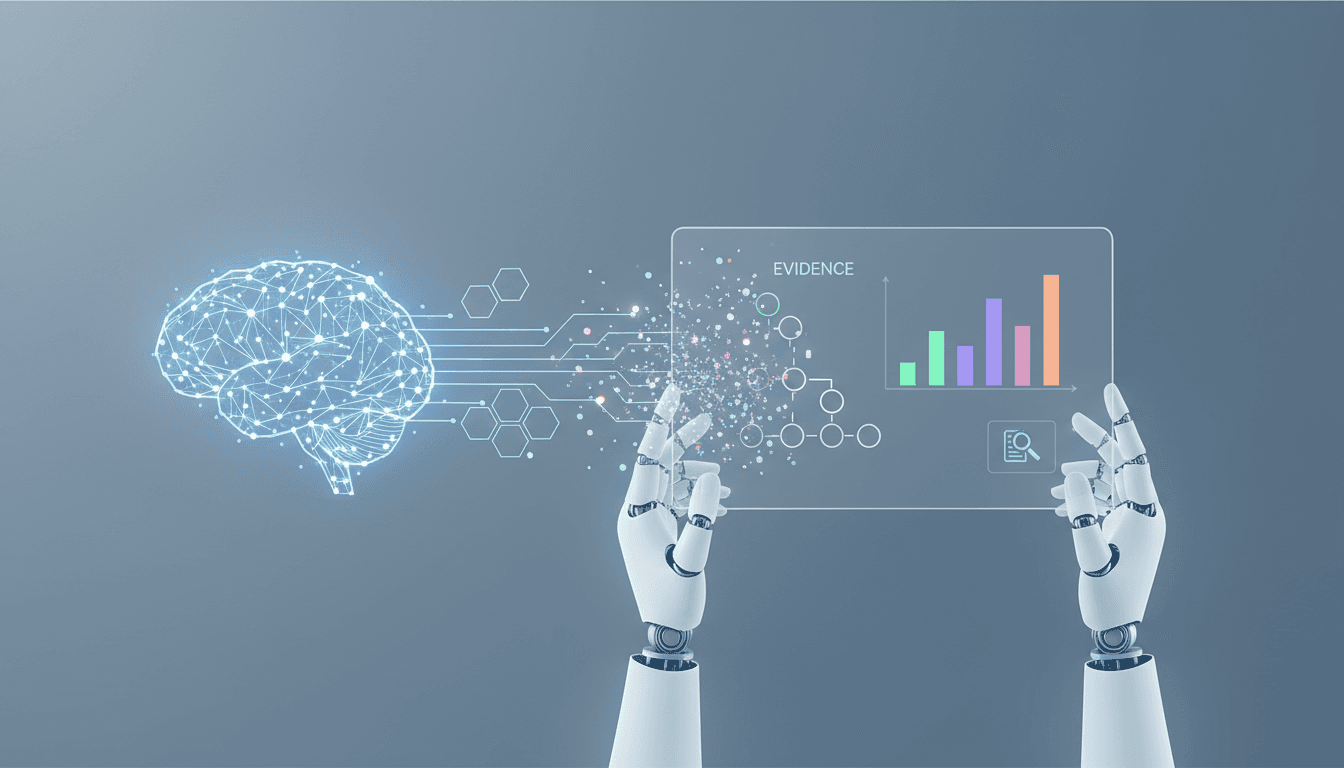
AI Interviews: Test Evidence, Not LeetCode Skills
You're probably seeing it everywhere: AI is "revolutionizing" interviews. Companies are scrambling to deploy automated screening, code analysis, and even AI-powered behavioral assessments. Most of it is garbage, frankly. It’s an expensive, inefficient way to replicate all the bad parts of traditional hiring, just faster. We're consistently failing to test for actual evidence of engineering capability, instead opting for the same LeetCode skills that barely translate to real work.
The problem isn't the AI itself; it's how we're instructing it. We’re feeding it the wrong inputs and expecting different results. If your goal is to find engineers who can build complex systems, debug production issues, and collaborate effectively, why are you asking them to invert binary trees on a whiteboard a machine is now scoring? This isn't about AI being inherently flawed; it's about our flawed understanding of what makes a good engineer, amplified by automation.
The LeetCode Trap, Now Automated
Remember those horrific 45-minute whiteboard sessions where you’d sweat through a dynamic programming problem, knowing full well you’d never touch anything like it in your day-to-day? Well, now an AI can score it for you. Tools like HackerRank, CoderPad, and even custom internal platforms are using AI to analyze code correctness, efficiency, and stylistic choices. The issue? Your "optimal" solution to a graph traversal problem might be technically perfect, but it tells me nothing about your ability to design a resilient microservice or mentor a junior engineer.
We've become obsessed with proxies. LeetCode-style problems are a proxy for problem-solving; they test a very specific, narrow kind of problem-solving. AI, when pointed at these problems, is just a more efficient proxy-tester. It doesn’t understand the why behind your choices, the trade-offs you considered, or the context of a real-world system. It just sees the green checkmark or the red X. This approach filters out incredibly talented engineers who might struggle with competitive programming but excel at shipping production-grade software.
What AI Can Do Well: Pattern Recognition on Real Data
Where AI shines in hiring is pattern recognition on relevant data. Think about analyzing GitHub contributions, open-source projects, or even structured responses to scenario-based questions. Instead of simulating a data structure problem, imagine an AI being trained on hundreds of thousands of successful engineers' project portfolios. It could identify common architectural patterns, code quality indicators, or even collaboration styles from commit messages and pull request reviews.
This means shifting from prescriptive "solve this exact problem" prompts to more exploratory "here's a problem space, how would you approach it?" scenarios. An AI could then analyze the generated artifact—be it a design document, a small API prototype, or a set of test cases—against a rubric derived from successful real-world engineering work. This moves us from testing abstract skills to evaluating tangible evidence.
The Open-Ended Take-Home: A Better Starting Point
Take-home assignments, despite their bad rap for being time-consuming, are a much better source of evidence than any LeetCode problem. The trick is making them reasonable and focused. Don't ask for a full-stack e-commerce app in 4 hours. Instead, design a task that reflects a core part of the actual job. For a backend role, maybe it's building a small, well-tested API endpoint with specific constraints, or optimizing a database query. For a frontend role, perhaps it's implementing a complex UI component with accessibility in mind.
An AI can then be trained to evaluate these submissions. Not just for correctness, but for things like:
- Code Structure and Readability: Are variable names descriptive? Is the code organized logically?
- Testing Practices: Are there unit tests? Do they cover edge cases?
- Error Handling: How does the code gracefully handle unexpected inputs or failures?
- Scalability & Performance Considerations: Does the solution show awareness of these aspects, even if it's a small task?
- Documentation: Is there a README explaining how to run and test the project?
This shifts the evaluation from "did they get the right answer" to "did they write good code that solves a realistic problem thoughtfully?" It's a fundamental change in philosophy.
Designing AI-Friendly, Evidence-Based Challenges
To make an AI interview truly useful, you need to design challenges that generate rich, quantifiable evidence relevant to the job. This isn't about "trick questions" or "gotchas." It's about simulating aspects of the engineering role.
Consider these types of challenges:
- Code Review Simulation: Present a snippet of code with bugs, performance issues, or bad practices. Ask the candidate to identify problems and suggest improvements. An AI can compare their findings against a known set of issues.
- API Design Exercise: Describe a new feature requirement. Ask the candidate to design the API endpoints, data models, and potential integration points. The AI can analyze the structure, consistency, and completeness of the proposed design.
- Debugging Scenario: Provide a small, broken application or a failing test suite. The task is to identify and fix the root cause. AI can verify the fix and potentially analyze the steps taken to debug.
- Architectural Decision Document: Give a high-level problem statement (e.g., "design a notification service"). Ask for a brief document outlining key components, technologies, and trade-offs. AI can analyze keywords, structure, and completeness against a rubric.
The key is that these are all artifacts that an engineer would produce in a real job. The AI isn't judging a live performance; it's evaluating a tangible output.
The Human Element: Still Critical
Here's the honest caveat: no AI should ever be the sole decision-maker. It’s a tool for screening and initial assessment, not final judgment. The output of an AI should be a strong signal, not a definitive "hire" or "no hire." You still need human engineers to review the most promising candidates, dive deeper into their solutions, and conduct behavioral interviews.
AI can help you efficiently filter out candidates who clearly don't meet the baseline or highlight those who demonstrate exceptional skills. It can do this without the biases that often creep into human resume screening or initial phone calls. But the nuances of collaboration, communication, and cultural fit—those are still firmly in the human domain. Don't let anyone tell you otherwise.
Metrics That Matter: Beyond Pass/Fail
If you're implementing AI in your hiring, you need to track the right metrics. Forget "pass rate" on LeetCode problems. Start looking at:
- Correlation with On-the-Job Performance: Do candidates who score well on your AI-powered, evidence-based challenges actually perform better in their first 6-12 months?
- Time-to-Hire Reduction: Is the AI effectively speeding up the initial screening process without sacrificing quality?
- Candidate Experience: Are candidates finding the process fair, relevant, and engaging? (You can survey this!)
- Diversity of Hires: Is the AI helping to broaden your candidate pool and reduce unconscious bias, or is it just amplifying existing issues?
These are the outcomes that truly matter. If your AI solution isn't moving these needles in the right direction, it's just an expensive toy. Companies need to be rigorous about A/B testing their interviewing approaches, just like they A/B test product features.
Implementing This: A Phased Approach
You won't switch overnight from LeetCode to AI-driven evidence testing. It's a journey. Start small.
- Identify a Pain Point: Where is your current interview process most broken? Is it resume screening, initial coding challenges, or something else?
- Design a Single, Evidence-Based Challenge: Pick one of the types mentioned above (e.g., a code review task or a small API design). Make it short—think 1-2 hours max for the candidate.
- Develop an AI Evaluation Rubric: Work with your senior engineers to define what "good" looks like for this specific challenge. What are the key criteria? How would a human engineer score it? This forms the basis for training your AI.
- Pilot with a Small Group: Run this new challenge alongside your existing process for a set of candidates. Compare the results. See if the AI's assessment aligns with your human engineers' assessments.
- Iterate and Expand: Refine your challenge and rubric based on feedback. Once you have confidence in one area, expand to another.
This isn't about replacing engineers with machines; it's about making engineers' time more effective and ensuring we're actually hiring people who can build amazing things. Stop testing for abstract competitive programming skills. Start testing for actual engineering evidence.
Ready to Ace Your Next Interview?
Practice with AI-powered mock interviews tailored to your target role and company. Start Practicing for Free | Explore Interview Prep